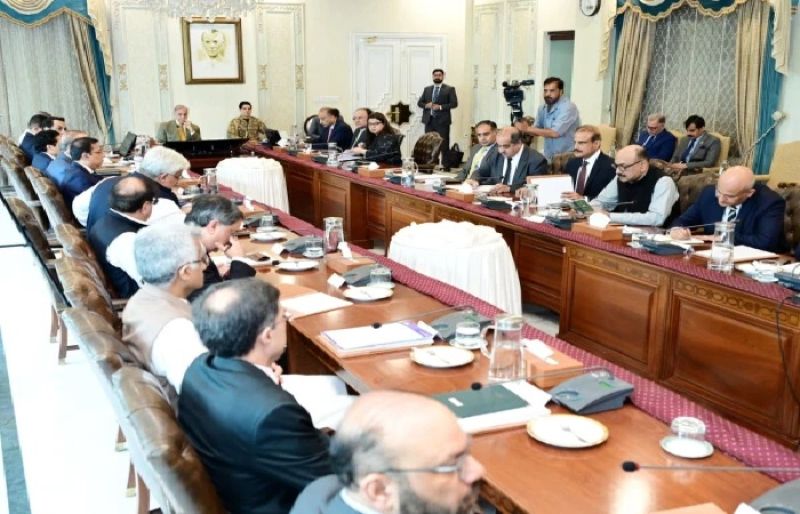
Prime Minister Muhammad Shehbaz Sharif has directed the Federal Board of Revenue to develop a comprehensive and scientific methodology for assessing tax potential across different sectors to strengthen revenue generation and improve tax administration.
He was chairing a weekly review meeting on FBR reforms in Islamabad today, where he reviewed progress on revenue enhancement and institutional reforms.
The Prime Minister directed the authorities to identify individuals and businesses involved in undocumented economic activities and tax evasion, in coordination with the power sector, and take legal action against them.
He instructed the FBR to operationalize the digital production monitoring system by December in the textile, beverages, steel, poultry, edible oil and ghee, and tyre sectors. He also directed to ensure the implementation of production tracking system across the manufacturing sector by the end of this year.
Appreciating the efforts of the Chairman FBR and his team, Shehbaz Sharif said that for the first time in Pakistan's history, the alignment between production data of the sugar sector and FBR records reflects the effective performance of the FBR's tracking system.
The Prime Minister also directed the Chairman FBR and senior officers to visit Karachi during the first week of every month to hear and resolve the issues of the business community. He further ordered an immediate third-party audit and validation of customs bonded warehouses to identify and address any irregularities.
The meeting was informed that the tracking system is fully operational in the sugar, cement, tobacco, tiles and fertilizer sectors, while implementation in five additional sectors, with a tax potential of more than 700 billion rupees, is in its final stages.
It was further informed that work is underway to introduce the system in nine more production sectors with an estimated tax potential of 560 billion rupees.
It was informed that 957 third-party auditors have been appointed to enhance transparency, while the process of recruitment is underway for 280 goods evaluators. It was also informed that customs faceless system has reduced goods clearance time and improved revenue collection.
The meeting was further informed that the Alternative Dispute Resolution Committees (ADRCs) resolved 152 out of 377 tax cases within 90 days, resulting in the recovery of 54 billion rupees.