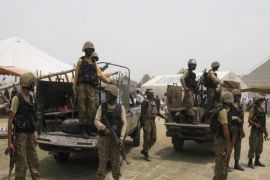
Former Foreign Minister and Chairman of the Pakistan People's Party (PPP), Bilawal Bhutto Zardari, has urged the international community to look to Pakistan’s security forces as a model in the fight against terrorism, citing successful operations like Zarb-e-Azb and Radd-ul-Fasaad that, he said, “crippled terrorist networks” and significantly improved the country’s internal security.
Speaking at an international conference in Islamabad titled ‘Pakistan’s War Against Terrorism’ on Wednesday, Bilawal delivered a strong message to both domestic and global audiences, asserting that Pakistan will never bow to terrorists.
He reaffirmed the country’s firm stance in the fight against extremism, stating, “Surrender is not a word in Pakistan’s dictionary.” He stressed that terrorism is a global issue that demands coordinated international action.
Highlighting the sacrifices Pakistan has made, Bilawal reminded the world that the country has lost over 90,000 lives in its war against terror and suffered major economic setbacks. “Pakistan has paid a heavy price—both in blood and in resources,” he said.
Bilawal also raised concerns over the rising threat of digital terrorism, describing it as one of the most complex security challenges of the modern era. He called on Silicon Valley to reform its algorithms to help counter online extremism, stating, “Protecting future generations requires us to address this evolving threat now.”
Touching on regional dynamics, Bilawal emphasized the shared responsibility of neighboring countries—particularly Afghanistan and India—in ensuring regional stability.
In a bold call for unity against terrorism, he even extended a proposal for cooperation with both the Hindutva-led Modi government and the Taliban’s interim regime in Afghanistan to collectively combat extremism.
Bilawal called upon India to refrain from blame games and instead become part of global efforts to counter terrorism. “Pakistan talks of peace in Kashmir and Palestine,” he stated, reiterating Islamabad’s willingness to fight terrorism shoulder to shoulder with New Delhi—if India is ready to abandon its extremist mindset.
"The Indian leadership must change its hardline approach," Bilawal said, adding that India should engage in sincere dialogue over the Kashmir issue.
He accused India of funding terrorism in Balochistan, particularly by financially supporting groups like the Balochistan Liberation Army (BLA) and the Majeed Brigade.
Touching on regional threats, Bilawal expressed concern over a 40% surge in attacks on Pakistan since the Taliban assumed power in Afghanistan.
Bilawal urged the Afghan government to prevent its territory from being used for cross-border terrorism.
He affirmed Pakistan’s willingness to cooperate with Afghanistan in the war against terrorism: “We’re ready to stand shoulder to shoulder with Afghanistan to eliminate terror.” He urged the Afghan government to honour the terms of the Doha Agreement to ensure lasting regional stability.
Bilawal emphasised, “Terrorism has no religion, no tribe, and no nation.” This universal threat, he said, calls for joint action across borders and ideologies.
He also echoed the last words of his mother, former Prime Minister Benazir Bhutto, recalling her warning that terrorists sought to hoist their flag in Swat.
He cautioned that terror organisations are actively targeting youth for recruitment and called for urgent measures to counter this influence.
He added that the China-Pakistan Economic Corridor (CPEC) plays a vital role in regional geopolitics, pointing out that its route passes from Khyber Pakhtunkhwa to Balochistan.